

Key takeaway: Prepare the middle. Address the stimulus at the beginning and end.
Hit the stimulus at the beginning and end.

Creative writing. It can feel like a daunting task, especially during exams.
You spend all year honing your writing skills, developing your voice, and constructing a piece of writing and then…
You’re put in an exam and asked to write something completely new based on a stimulus. It’s hard to see the ‘creative’ part when under exam conditions.
Here’s a little trick to help you harness the great work you’ve done throughout the year developing your voice while also ensuring you meet the demands of the question, especially when you’re feeling stuck in the exam.
The key is to know your well-crafted pieces and think about effective ways to reuse your best writing.
Try experimenting with structural devices like flashbacks, extended metaphors, or anecdotes. These can showcase your skills and use of language while also being flexible enough to fit into a broader narrative in response to a stimulus.
Often, a flashback or anecdote can be an engaging descriptive piece of writing that you’ve refined throughout the year.
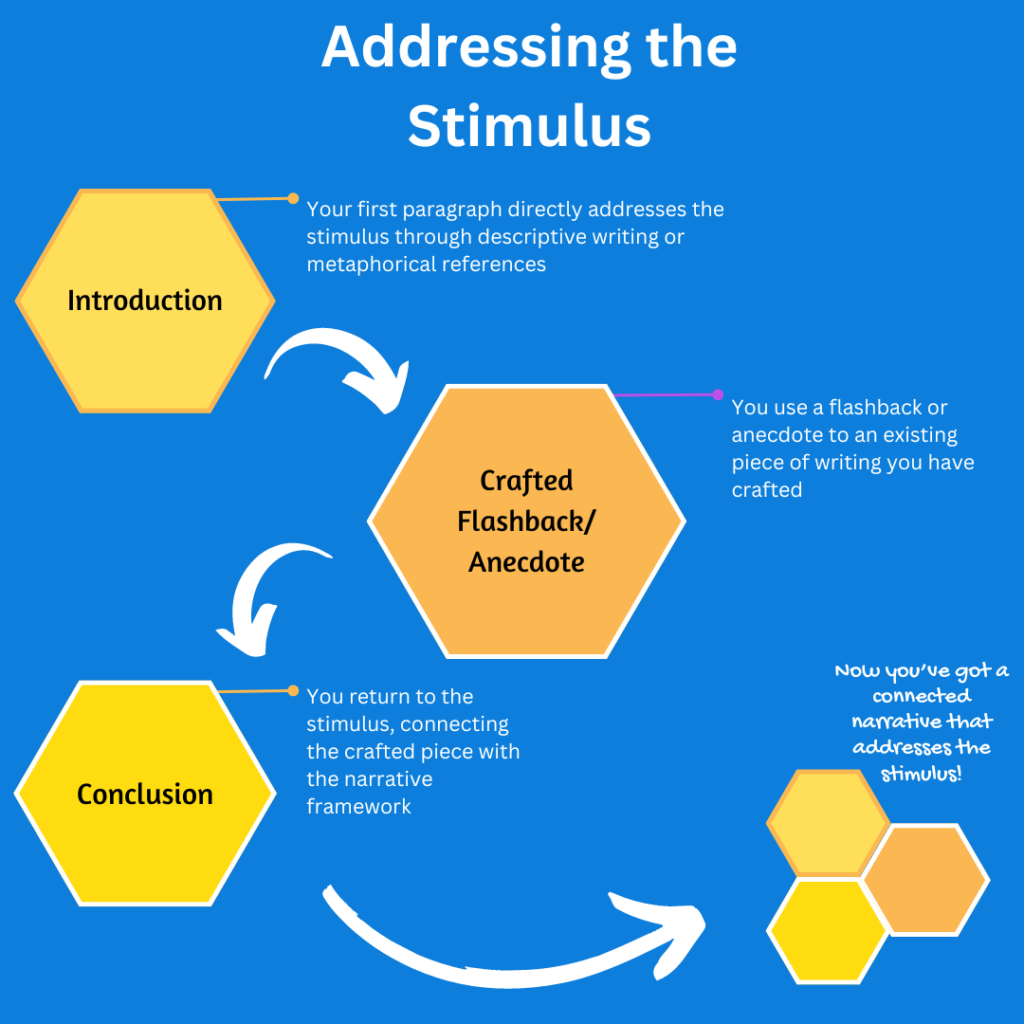
Practice using these pieces as flashbacks in response to different stimuli. Here’s a simple structure to follow:
- Introduction: Start with a metaphorical or conceptual engagement with the stimulus leading to a flashback moment.
- Flashback: Integrate your draft as a key moment illustrating an important concept.
- Conclusion: Create a final paragraph that returns to the stimulus, showing the connection with the flashback.
This method can also work for discursive and persuasive writing by using anecdotes or analogies that have been effective in your previous pieces.
Make the most of the writing you’ve done in class while ensuring you engage with the question in the exam!
 RETHINK LEARNING
Leave a comment