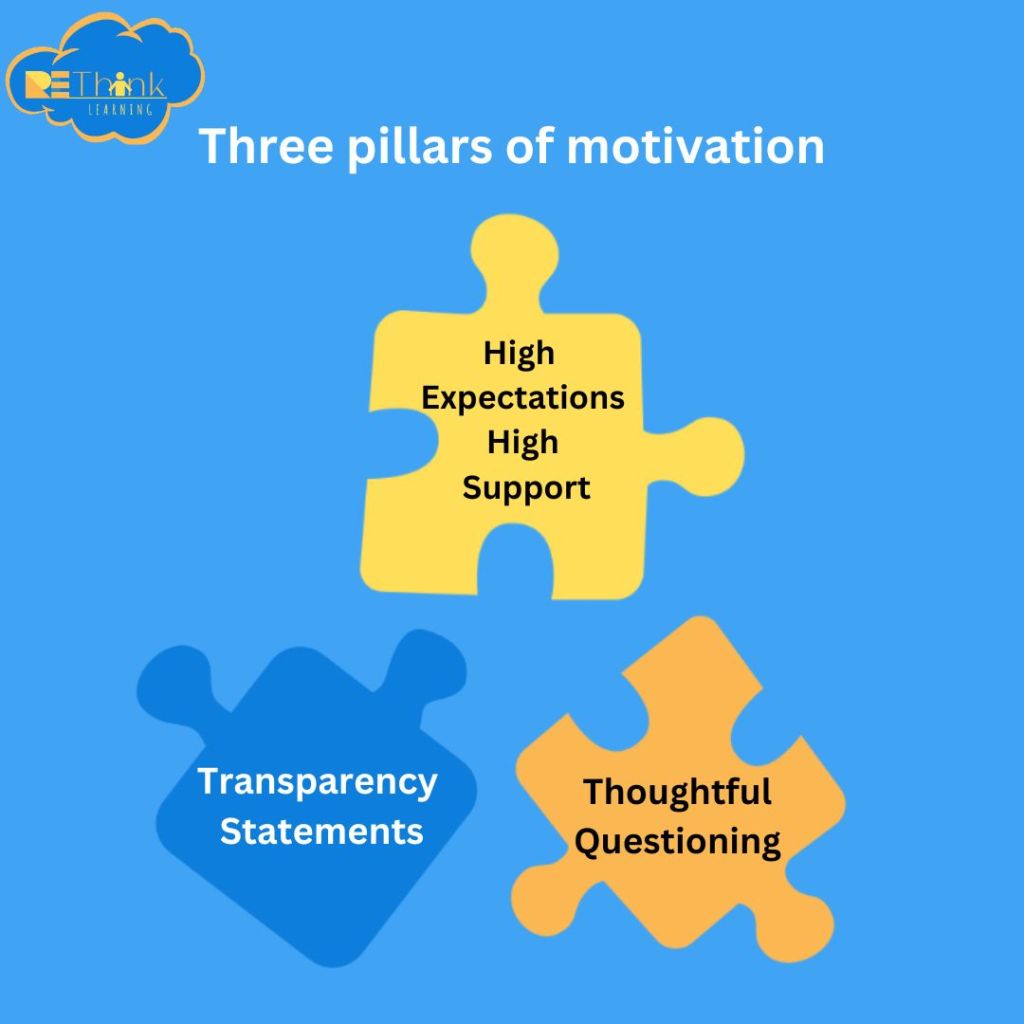


Key takeaway: Students are motivated by social status and acceptance. Learning needs to be made purposeful and challenging.
The key to student motivation is to foster a growth mindset, reframe stress and develop a purposeful approach to learning. Here are three strategies we can use to foster student motivation.

Transparency Statements
Explain why activities matter and why you’re setting a challenge. “I think you’re really capable of this and I think if you put your mind to it you can really excel.” A clear rationale helps teens feel believed in, identify a purpose and stay engaged.
Thoughtful Questioning
Questioning can make students feel validated about their concerns. Ask open-ended questions like, “What’s your biggest takeaway from this chapter?” or “How could you apply this concept to real life?” Such prompts foster reflection and ownership of learning.
High Expectations, High Support
Communicate belief in each student’s potential: “This is a really challenging subject, here’s how I’ll help.” Pair challenging goals with step-by-step guidance to prevent overwhelm and nurture confidence.
By making learning relevant, encouraging autonomy, and combining ambition with genuine support, students can develop a strong sense of agency and long-lasting motivation
 RETHINK LEARNING
Leave a comment