

Key takeaway: Start adjusting sleep routines a week before school returns, involve your child in preparation, and keep conversations focused on what they can control—not what might go wrong.
The back-to-school period is officially one of the most stressful times of the year for Australian families. Recent research from HP Australia found that 59% of parents find this transition stressful, with almost half saying 2026 feels harder than previous years. If your household has experienced arguments, tears, forgotten items and last-minute panic in that first week back, you’re far from alone.
The good news? A few simple, evidence-based strategies can make the shift from summer holidays to Term 1 significantly smoother—for your child and for you.
Why the Transition Feels So Hard
After six weeks of later bedtimes, unstructured days and plenty of screen time, the return to early alarms and packed schedules is a genuine shock to the system. Child psychologist Deirdre Brandner notes that back-to-school anxiety rarely looks like obvious panic. Instead, it shows up as irritability, sleep problems, stomachaches, or resistance to getting ready in the morning.
For children, the unknowns feel enormous: a new teacher, different classmates, harder work, shifting friendships. For parents, there’s the pressure to reinstate routines while managing work, activities and homework expectations. Research suggests parental stress can transfer to children, making it even more important to manage your own response to this period.
Start With Sleep (A Week Early)
Sleep is the foundation everything else rests on. During the holidays, most children’s sleep schedules drift later—sometimes by an hour or more. Expecting them to suddenly wake at 6:30am on day one rarely ends well.
Begin shifting bedtime and wake-up time gradually, about a week before school starts. Move both earlier by 15 minutes every two days until you reach the target schedule. This gentle adjustment gives their body clock time to catch up without the drama of sudden change.
The recommended sleep for school-aged children is 9–12 hours per night, while teenagers need 8–10 hours. If your child has been staying up late gaming or scrolling, this reset period is essential.
Involve Your Child in Preparation
Children feel more confident when they have some control over their situation. Rather than doing all the preparation yourself, bring them into the process. Let them choose their lunchbox items, help organise their school bag, or pick out clothes the night before.
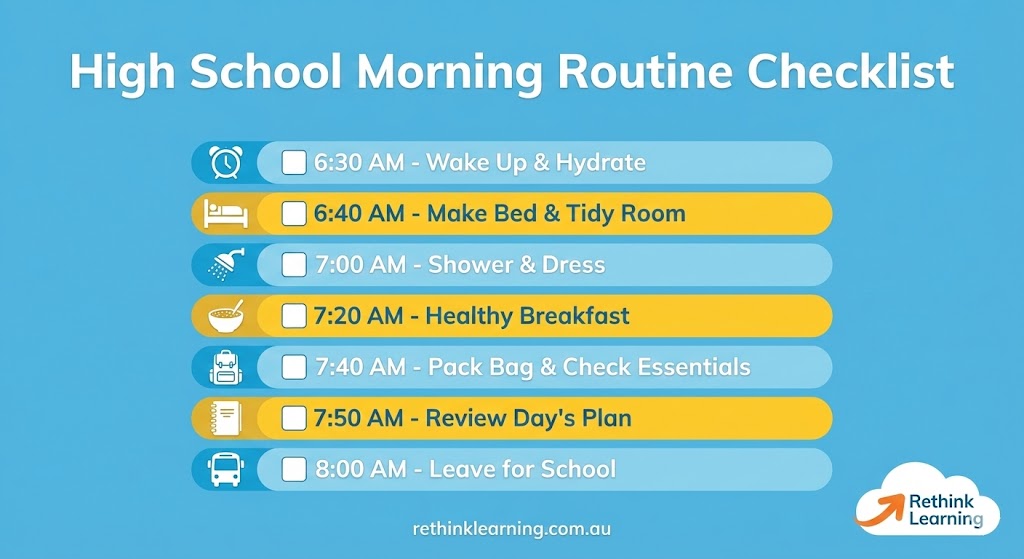
For younger children, creating a visual schedule for mornings can reduce the daily battles. Research shows that 83% of parents believe clearer routines and visual checklists would reduce household arguments and stress. A simple chart showing the morning sequence—eat breakfast, brush teeth, get dressed, pack bag—gives children a sense of ownership and predictability.
For older children and teens, this might look like discussing their goals for the year or helping them set up a study space. The key is making them active participants rather than passengers in the transition.
Talk About Feelings (But Don’t Overdo Reassurance)
Open conversations about the return to school matter, but how you respond to worries makes a real difference. When children express anxiety, the instinct is to immediately reassure them that everything will be fine. However, child psychologists suggest a different approach.
Instead of “Don’t worry, it’ll be great!”, try something like “It’s normal to feel nervous about new things. I believe you’ll find your way.” This validates their feelings while expressing confidence in their ability to cope. Over-reassurance can accidentally signal that there really is something to fear.
Ask open questions about what they’re looking forward to and what feels uncertain. For worries within their control—like not knowing anyone in their class—brainstorm practical solutions together, such as joining a lunchtime club or finding one familiar face to connect with.
Reduce Screen Time Before School Returns
Nearly two-thirds of Australian parents say holiday screen time makes the transition back to school harder. The contrast between unlimited gaming or social media and the focused attention school requires is jarring for children’s brains.
In the week before school starts, begin reintroducing screen limits. Replace some screen time with activities that require sustained attention: reading, puzzles, board games, or creative projects. This helps recalibrate their ability to focus before they need it in the classroom.
An overwhelming 83% of parents want to reduce their child’s screen time as the school year begins. Making this shift before Term 1 starts means you’re not fighting that battle during an already stressful week.
Prepare Practically (But Don’t Over-Control)
Getting organised helps, but trying to control every variable can backfire. Focus on the basics: school supplies sorted, uniform ready, lunches planned. Prepare bags and clothes the night before to reduce morning chaos.
If your child is starting at a new school or moving from primary to secondary, a practice run can help. Visit the school grounds, walk the route, and help them visualise their day. Research shows that repetition and familiarity reduce anxiety significantly—what psychologists call “coping ahead.”
However, resist the urge to script every moment or solve every potential problem in advance. Children build resilience by navigating small challenges themselves. Your job is to provide support, not a bubble.
Look After Yourself Too
Parental wellbeing directly affects children’s adjustment. If you’re stressed and frazzled, they’ll pick up on it. Take a few minutes to assess your own readiness: Is your work schedule manageable? Have you built in some buffer time for the unexpected? Are you modelling calm, or radiating panic?
Simple things help: meal planning for the first week, saying no to unnecessary commitments, and accepting that the first few days won’t be perfect. When parents approach the transition with confidence—even if it’s partly performed—children are more likely to do the same.
Frequently Asked Questions
When should I start preparing for back to school?
Begin adjusting sleep routines about a week before school starts. Shopping for supplies and organising uniforms can happen earlier, but the routine reset is best done in the final week of holidays.
How do I help my child who is anxious about a new school?
Visit the school before term starts—walk the grounds, find their classroom if possible, and practice the drop-off routine. Help them identify one thing to look forward to, even if it’s small. Validate their feelings while expressing confidence they’ll manage.
What if my child complains of stomachaches or headaches before school?
Physical symptoms are common expressions of anxiety. If symptoms are ongoing, check with your GP to rule out medical causes. If the pattern continues, it may be worth exploring what specifically is worrying them about school.
How much screen time is appropriate during the school term?
There’s no single right answer, but most experts recommend clear limits and screen-free times—especially in the hour before bed. The goal is balance: screens for learning and connection, but not at the expense of sleep, physical activity, or family time.
Making This Year Different
The back-to-school transition doesn’t have to be a period of chaos and conflict. Small adjustments—earlier bedtimes, shared preparation, open conversations, and a calm parental presence—can transform that first week from a battleground into a manageable milestone.
Start with one change this week. Whether it’s shifting bedtime by 15 minutes or sitting down together to pack the school bag, each small step builds toward a calmer, more confident start to the year.
Looking for more support with your child’s learning journey? Explore how Rethink Learning can help with personalised tutoring and resources for NAPLAN and HSC preparation.
 RETHINK LEARNING
Leave a comment